Automated Follow-Up Calls: 9 Best Practices for 2026
Automated follow-up calls are the highest-ROI use case in AI calling — but only when the sequence is designed deliberately. Here are nine patterns that consistently work.
1. Reference the prior touchpoint by name
"Last time we spoke, you mentioned…" is the single highest-impact phrase in a follow-up call. Pull the prior transcript or CRM note and use it.
2. Cap the sequence at five touchpoints
Past five, response rates collapse and complaints climb. End the sequence cleanly.
3. Mix channels, not just calls
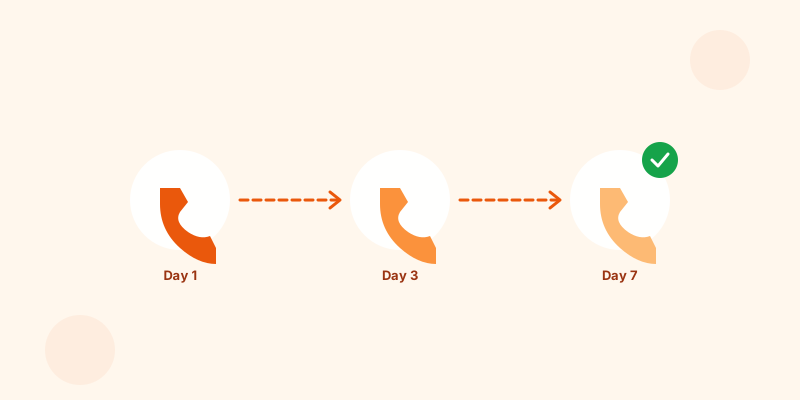
Day 0 call → Day 2 SMS → Day 5 personalized email → Day 9 final call. Pure-call sequences fatigue fast.
4. Time the first follow-up within 24h
Connect rate on a 24h follow-up is 2–3x a 72h follow-up.
5. Always offer a self-serve next step
Calendar link in SMS, payment link via email, app deep-link in voicemail. Many prospects prefer to act async.
6. Detect intent shifts mid-sequence
If the prospect says "I'm not the right person", route the next touchpoint to whoever they named — not the original contact.
7. Honor opt-outs hard
Any "stop calling", "don't call back", or "remove me" → instant suppression across all channels. No exceptions.
8. Run cohort A/B tests on opening lines
Two voices, two opening lines, 1,000 calls each. The winner often has 30–50% higher connect rate.
9. Score every call, route warm leads instantly
Phone Stack's outcome scoring lets you trigger an immediate human callback for top-decile signals. Don't let warm leads cool.
Sequences that work
- Post-demo: 24h call → 3-day email → 7-day call → 14-day final.
- No-show recovery: 1h call → 1-day SMS → 4-day call → close.
- Reactivation: 30-day call → 60-day SMS → 90-day call → suppress.
Try it
Phone Stack's follow-up calls solution ships with these patterns as starter sequences. Drop in your CRM, point at a list, ship.